Epidemics Education - Systems Thinking

Challenge
This project was part of a research study conducted at the University of Technology and Applied Sciences in Muscat and the University of Sydney. Previous studies found that medical students face difficulties grasping certain epidemiology concepts. The aim was to build agent-based models to help undergraduate students understand systems concepts and explore the nature and behavior of various diseases.
Solution
Six agent-based models were prepared for students to explore:
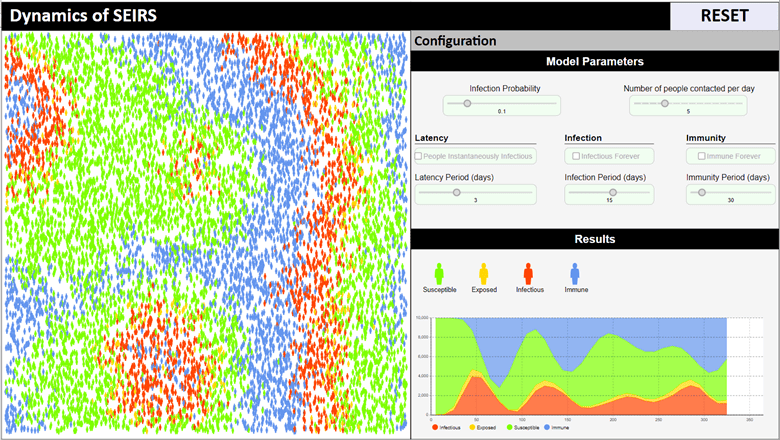
SEIRS Model
A typical model used in epidemiology to understand how a new unknown disease spreads and how long it would take to end. The letters stand for susceptible, exposed, infected, recovered, and susceptible again.
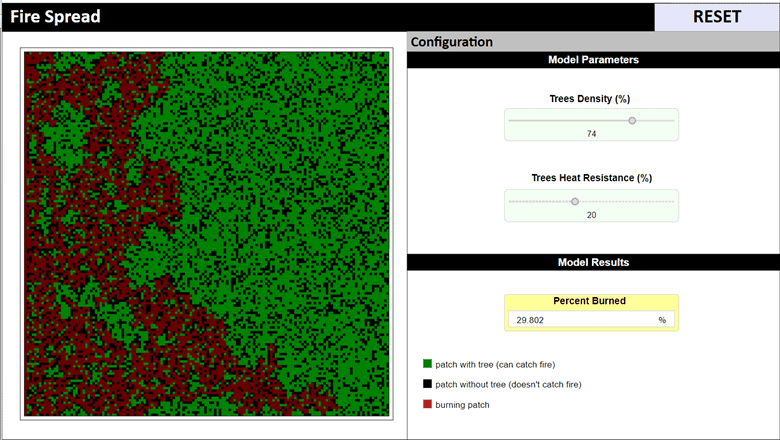
Forest Fire Model
Shows how a fire spreads through a forest with trees.
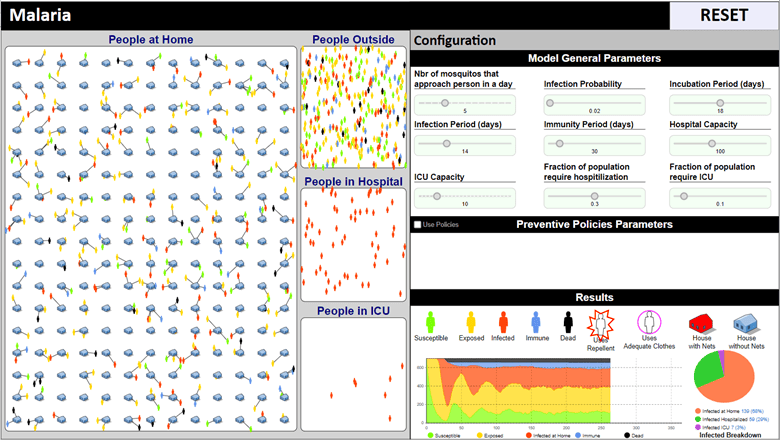
Malaria Model
Shows the behavior of a known disease with factors such as hospitalization and prevention policies (mosquito repellents and nets).
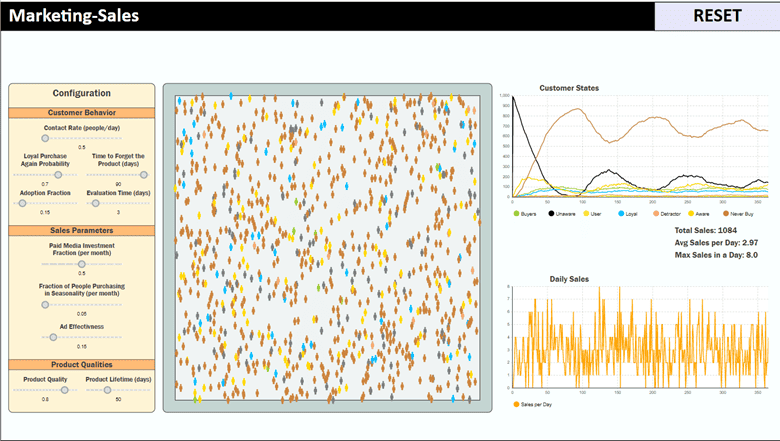
Marketing Model
Studies the effect of marketing campaigns such as advertisements on product sales.
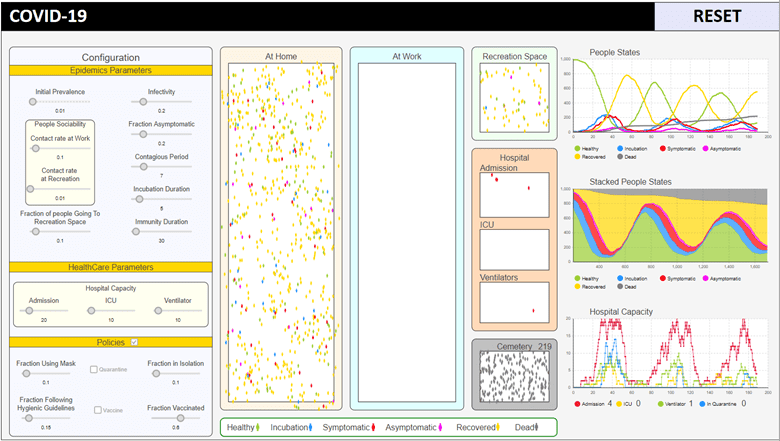
Covid-19 Model
Helps study the spread of covid with sociability factors and prevention policies such as masks, quarantine, and vaccination.
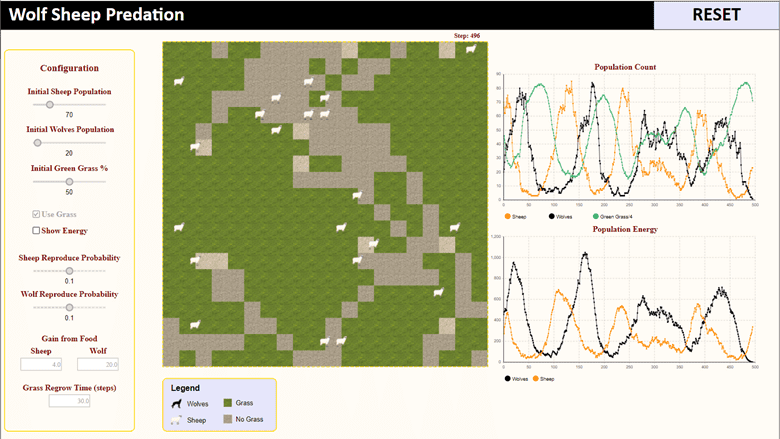
Predator-Prey Model
Studies the dynamics between interacting species in an ecosystem — wolves and sheep in this case.
Systems Concepts Conveyed
Each pair of models was designed to convey specific dynamic concepts:
- SEIRS and fire: Emergence
- Malaria and marketing: Tipping point and Resilience
- Covid and predator-prey: Dynamic equilibrium
Outcome
These models were used in an experiment on students to help learn complex systems ideas relevant to understanding epidemics. The study proved that this instructional approach could help students achieve deeper understanding and greater performance on declarative and explanatory knowledge about epidemic diseases, as well as transfer of such knowledge to new, previously unexposed problems.
Project Features
- Industry: Education and Epidemics
- Model: Agent-Based
- Duration: 1 month
Need a similar simulation for your project?
Become a Client