Military Gym Layout Optimization
Challenge
This project focused on analyzing people flow inside a gym facility to compare two different layouts and identify bottlenecks impacting movement efficiency and transition delays between areas. The facility accommodates groups of 150 to 200 people who transition through four workout zones to complete a routine before exiting.
Understanding how different layouts influence flow efficiency was critical for determining the best design for minimizing delays. The key challenge was identifying congestion points and evaluating throughput based on movement patterns.
Solution
A simulation model was built in AnyLogic to represent the gym facility in 2D. The Pedestrian Library captured individual movement dynamics and interactions with obstacles and other people.
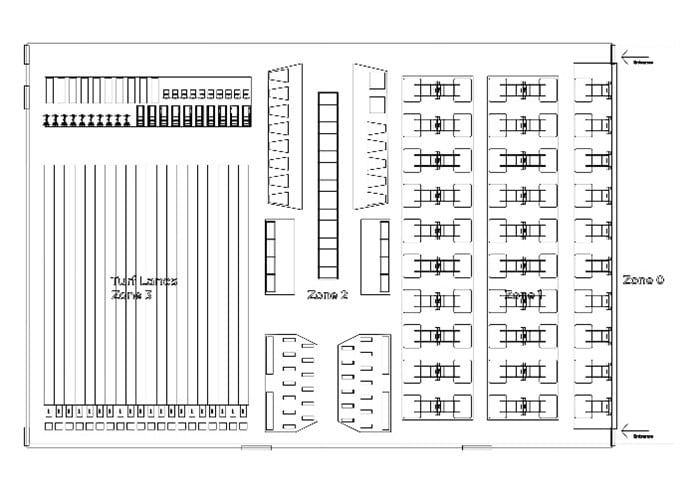
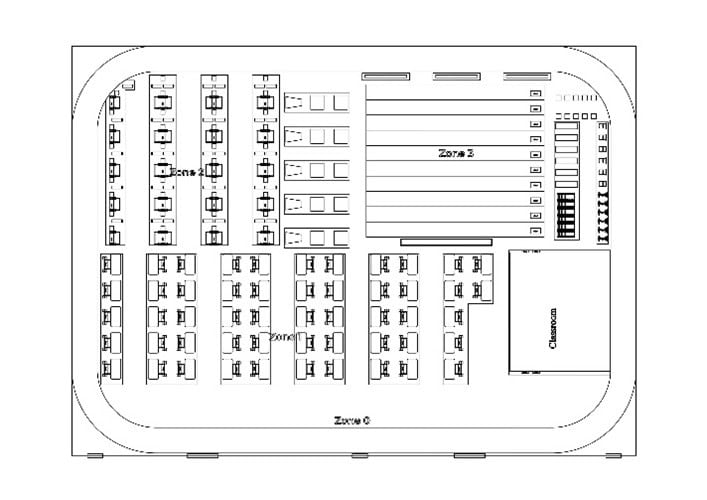
The model was built flexibly so the user can control input parameters (number of people, time at each station, movement speed, layout selection) from an Excel sheet, with enough flexibility to incorporate additional layouts for testing.
Throughput Analysis
To obtain throughput, we measured how much time it takes for each individual to move from their initial position in one zone to the final position in the next zone. Information was exported on an individual level for population analysis.
Bottleneck Analysis
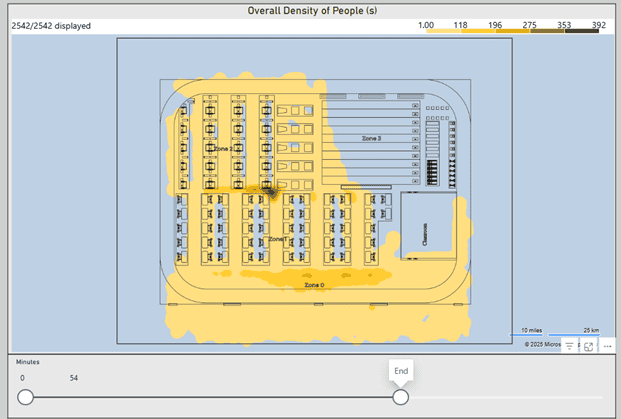
To find bottlenecks, we generated a set of uniformly distributed squares in the layout. Each time step, we calculated the density in the squares and the time individuals spend in each square. A square with high density or prolonged time is a potential bottleneck.
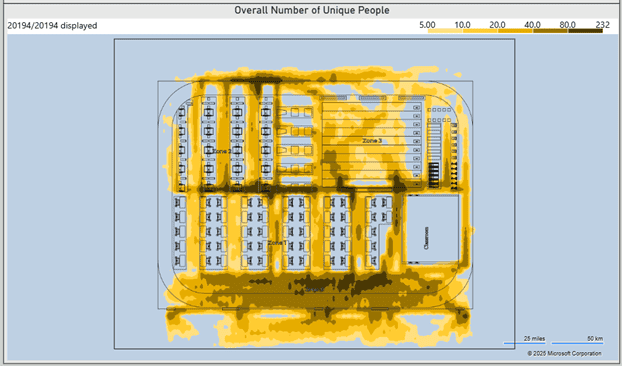
Results
The raw data exported from the model was used to generate different dashboards in Power BI.
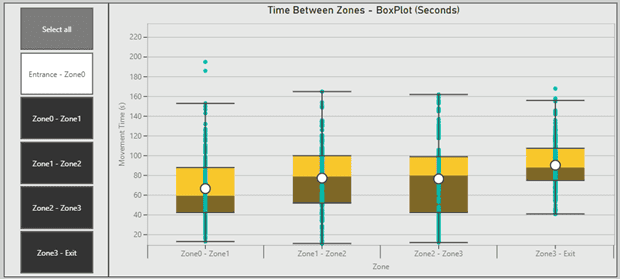
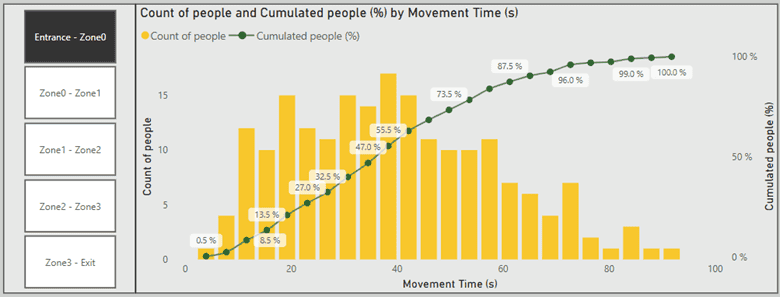
The client was able to test layout variations and make data-backed decisions before implementing physical changes, leading to a more efficient and user-friendly environment.
Project Features
- Industry: Military, Fitness
- Model: Pedestrian, Optimization
Need a similar simulation for your project?
Become a Client