Train Sequences in Railyard
Challenge
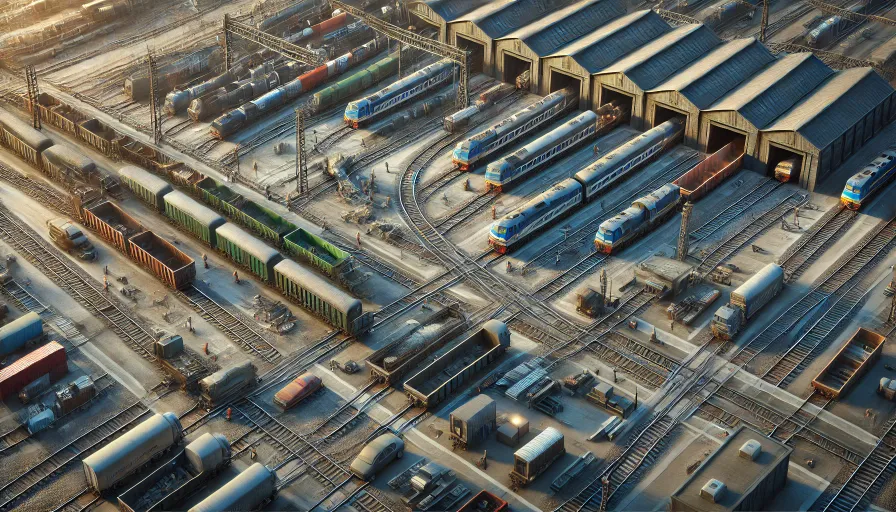
A railyard plays a critical role as a central hub where trains are assembled, maintained, and routed to various destinations. Efficient operation is essential for maintaining flow, ensuring on-time deliveries, and avoiding bottlenecks.
In a typical railyard, there can be numerous parallel tracks (up to 20) that interconnect at various points. Each train may follow a different sequence, creating complex routing challenges. The simulation must be flexible and standardized, allowing any route to be defined dynamically.
Key performance metrics include:
- Total route time for each train
- Time a train spends blocked by another
- Delays caused by shift changes
- Time spent on maintenance processes (locomotive washing, upkeep)
Solution
The simulation evaluates the potential benefits of adding parallel tracks to alleviate congestion, minimize deadlock risk, and enhance flow. Rather than modeling each individual track, train routes are defined in an Excel-like "recipe" format for easy modifications.
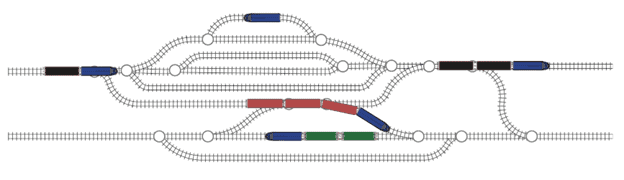
The simulation is built using AnyLogic's discrete event capabilities with the Process Modeling and Rail Libraries.
Model Architecture
The model features four key agents:
- Layout: Represents the logical blocks of the railyard and handles 2D animation
- Locomotive: Represents individual locomotives
- RailCar: The cars that each locomotive can transport
- Train: A composite of a locomotive and its attached railcars
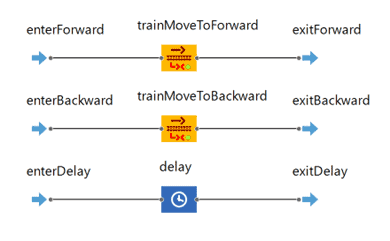
This structure ensures the model is both scalable and adaptable, capable of simulating various train configurations and operational scenarios.
Results
Bottlenecks and train blockages were identified in specific segments, providing valuable insights into operational constraints. However, detailed analysis revealed that while critical situations occurred, they were isolated incidents rather than systemic inefficiencies. The cost-benefit assessment indicated that disruptions were not significant enough to justify investment in additional parallel tracks.

Results were deployed in a spreadsheet showing train ID, origin and destination track, start and end times, and whether the train was interrupted or blocked.
Project Features
- Industry: Rail
- Model: Railyard Library
- Duration: 2 months
Need a similar simulation for your project?
Become a Client